Preserve New Mexico (host of the state's biennial Historic Preservation Conference) is a Cornerstones Community Partnerships (501(c)(3)) program that advocates for the preservation of New Mexico's architectural heritage and cultural landscapes.
New Mexico’s place to experience Historic Preservation
The New Mexico State Historic Preservation Conference brings preservation conversations to New Mexican communities. Themes explored in the conference include affordable housing, climate resilience, sustainability, heritage tourism and economic revitalization.
Coming Next Year
Why Albuquerque?
Nestled between the Rio Grande and the Sandia Mountains, Albuquerque is one of North America's oldest continuously inhabited places. For more than 12,000 years, the fertile Middle Rio Grande Valley has supported generations of Indigenous peoples whose cultures, traditions, and connections to the land remain vibrant today. Long before the founding of La Villa de Alburquerque in 1706, the region was home to thriving Pueblo communities, including more than forty villages in the Tiguex Province. Today, neighboring Pueblos such as Sandia and Isleta, together with landmarks including Petroglyph National Monument, acequia systems, and ancestral villages, remind visitors that New Mexico's heritage is a living tradition.
Founded as a Spanish colonial settlement along the Camino Real, Albuquerque grew into a crossroads where Indigenous, Hispanic, and later Anglo cultures came together to shape a city unlike any other in the Southwest. Old Town Plaza, San Felipe de Neri Church, historic neighborhoods, and traditional irrigation systems reflect centuries of cultural exchange, while the arrival of the Atchison, Topeka and Santa Fe Railway in 1880 transformed Albuquerque into a regional transportation and commercial center. Route 66 later brought a new era of architecture, tourism, and commerce, and the establishment of Kirtland Air Force Base, Sandia National Laboratories, and the birthplace of the personal computer industry added another remarkable chapter to the city's history.
Throughout these centuries, Albuquerque has preserved an extraordinary architectural legacy that reflects its many cultures. Earthen construction has been part of the Americas for millennia, and New Mexico's adobe tradition grew from the blending of Indigenous building knowledge with the masonry traditions brought by Spanish settlers. The result is a landscape where Pueblo villages, colonial churches, Territorial buildings, Pueblo Revival landmarks, Route 66 icons, and modern historic sites stand side by side. From the KiMo Theatre and the Indian Sanatorium to the old Federal Courthouse, the original Albuquerque Airport, and countless neighborhood landmarks, the city's built environment tells the story of adaptation, resilience, and shared heritage.
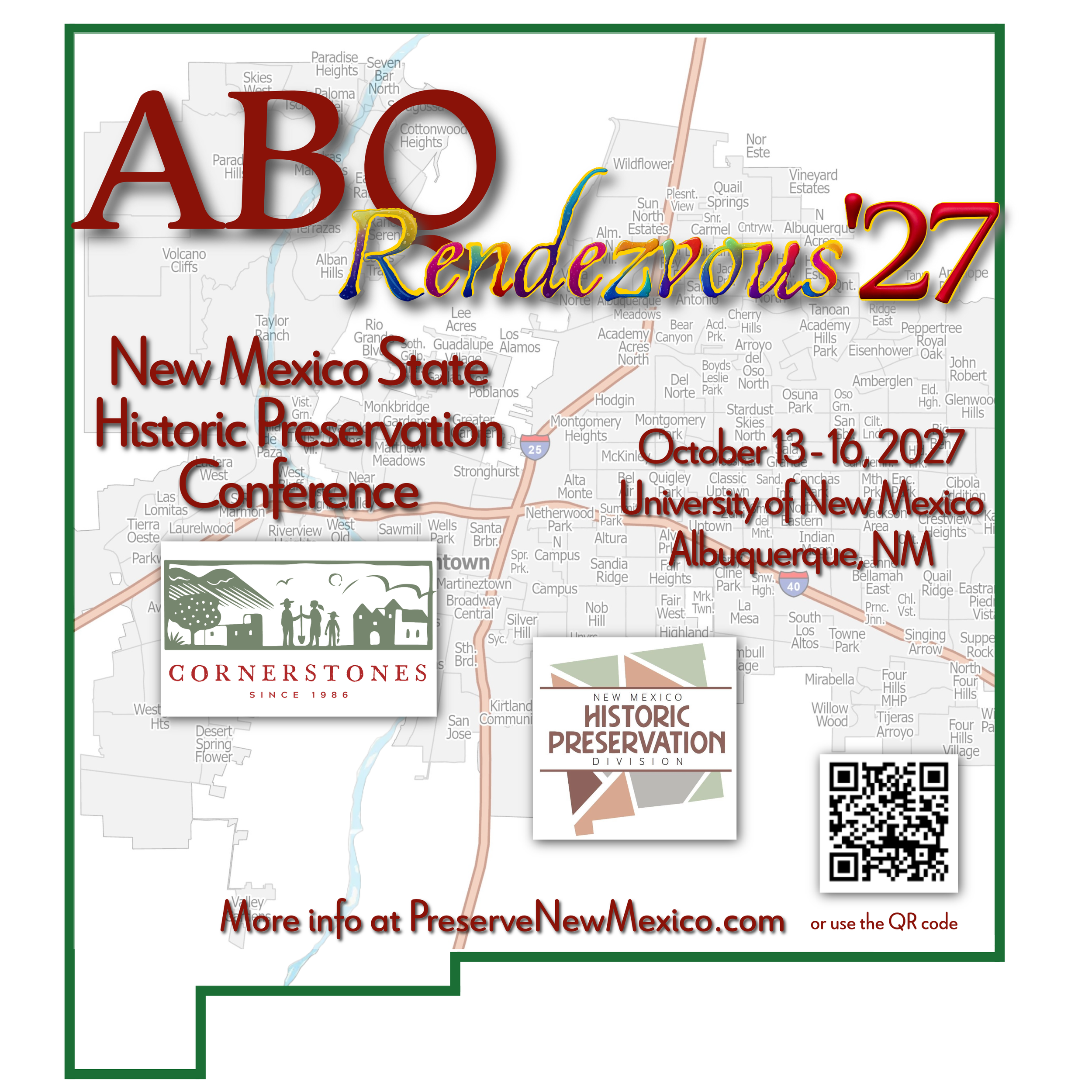
The 2027 State Historic Preservation Conference will place participants at the center of this remarkable story. Through educational sessions, field tours, workshops, and networking opportunities, attendees will experience a city where preservation is woven into everyday life. Albuquerque's unique blend of Indigenous heritage, Spanish colonial history, railroad expansion, Route 66 culture, scientific innovation, and architectural diversity makes it an inspiring setting to explore how historic preservation strengthens communities while shaping the future of the Southwest.